





PRODUCT CENTER
‹
›
‹
›
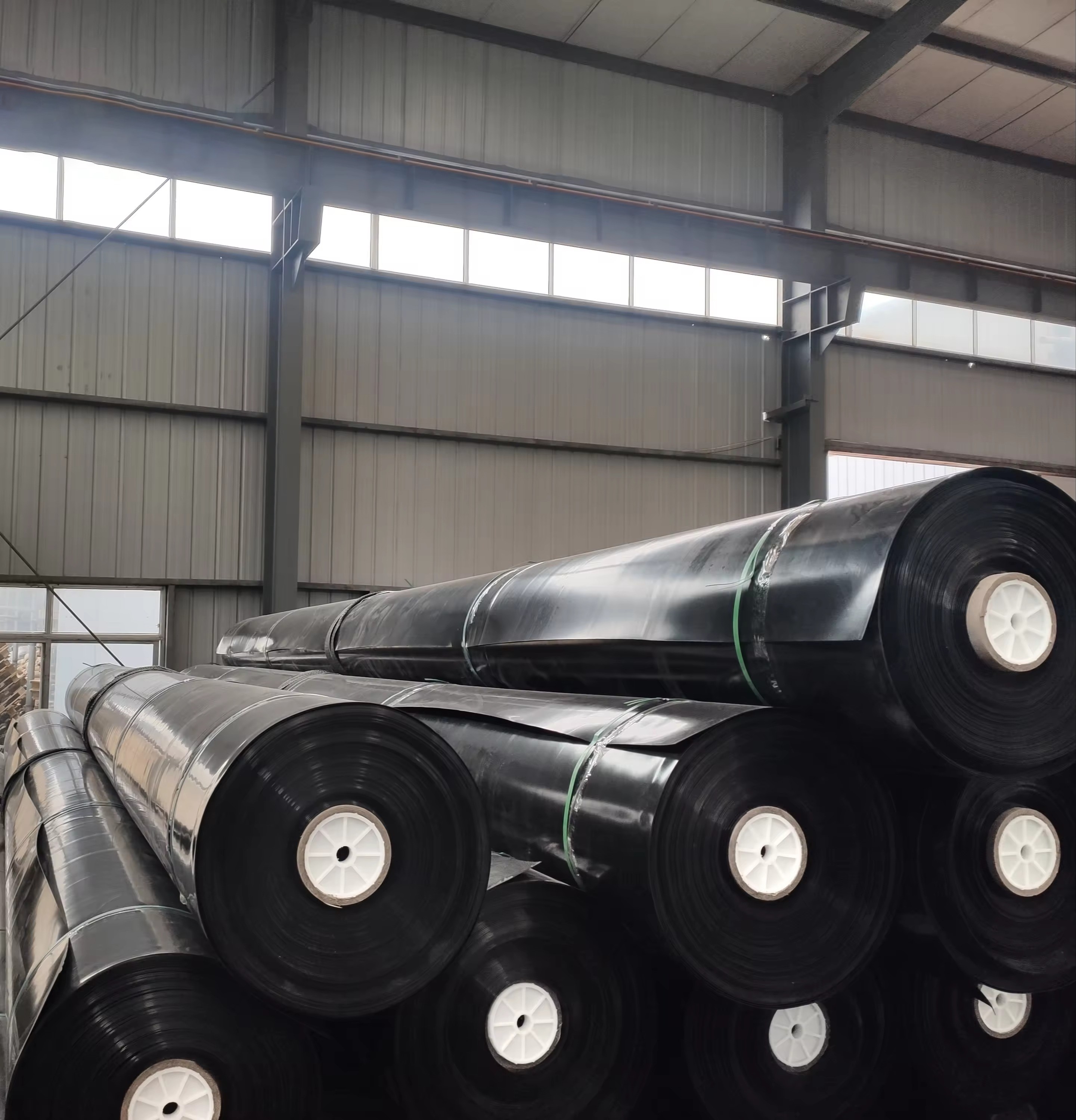
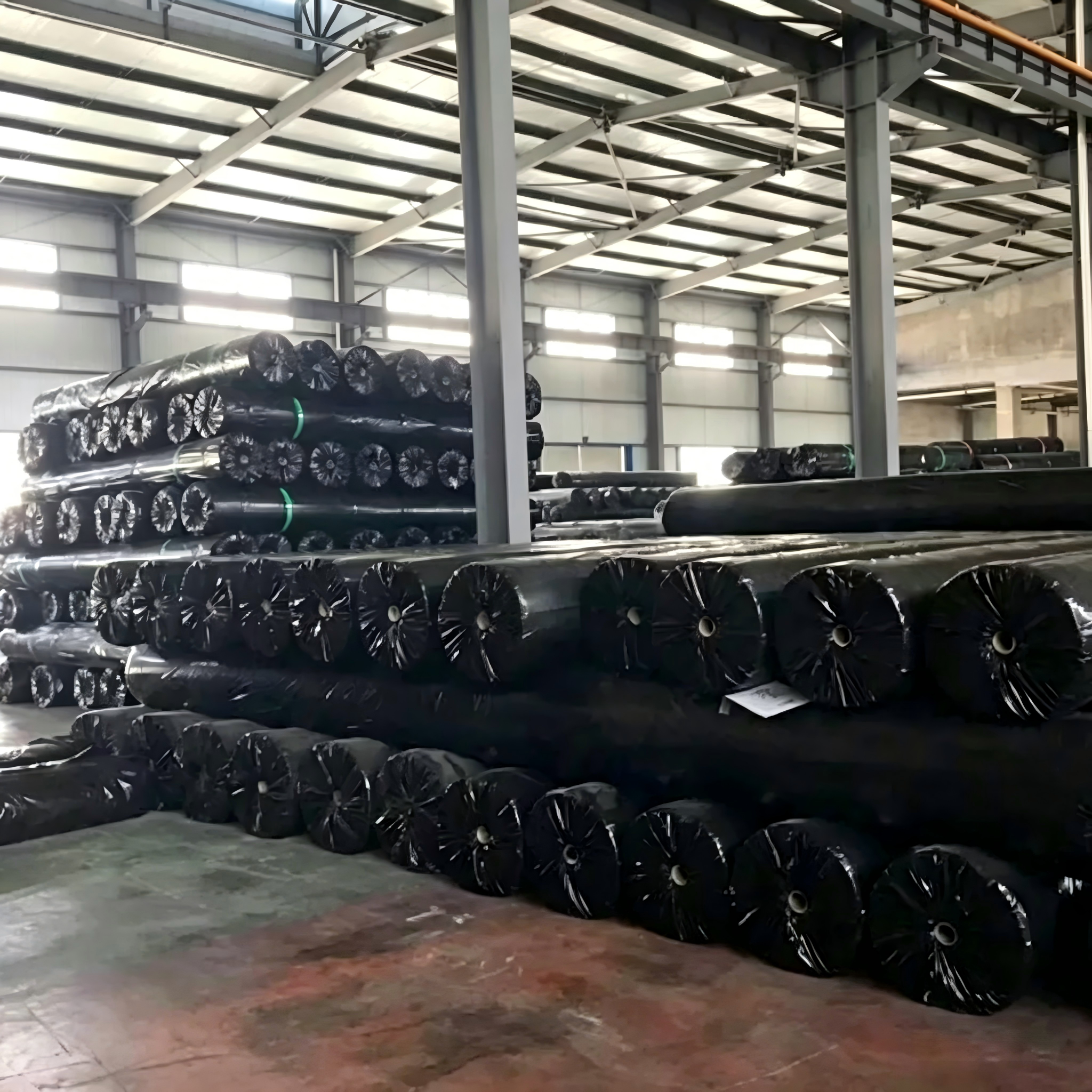
2)100% Virgin Raw Material
3)Double sided or single sided options available
4)Complete width and thickness specifications
5)Great factory price, fast delivery
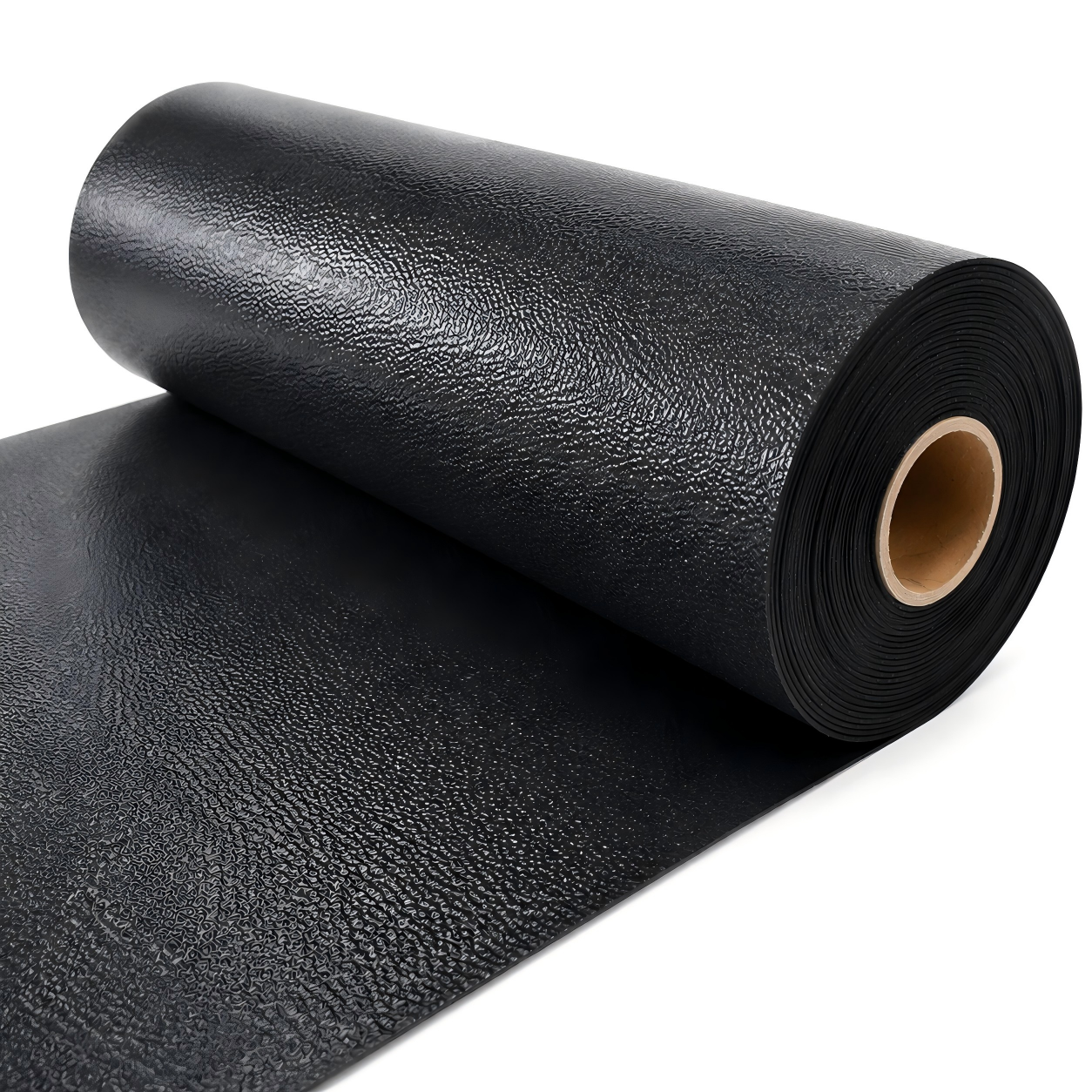
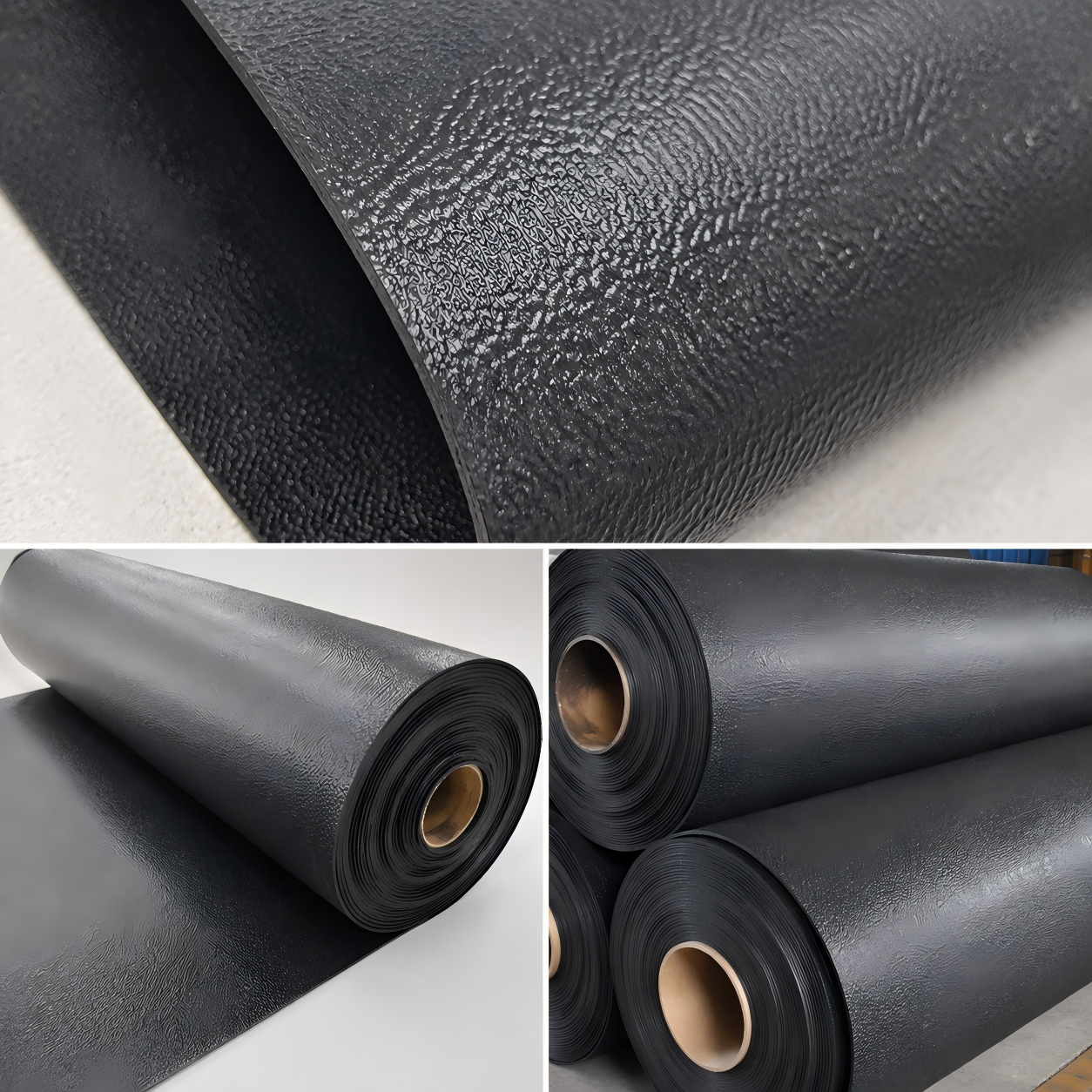
Textured geomembrane is synthetic barriers designed to create a strong seal against fluid or gas migration in civil, geotechnical, and environmental engineering applications. Unlike smooth geomembranes, textured versions feature an embossed surface that enhances frictional characteristics, crucial for improving slope stability and preventing slippage in applications such as landfill liners and containment structures.
These geomembranes are essential in modern engineering, offering exceptional stability, durability, and impermeability across various uses. From landfill liners to aquaculture ponds, their unique surface ensures safety and performance in challenging environments. Understanding their features and benefits allows for informed decision-making to optimize project success.
Whether for large mining operations or small agricultural ponds, textured geomembranes provide a reliable, cost-effective solution. At BPM Geosynthetics, we offer high-quality textured geomembranes at competitive factory prices, ensuring you receive the best value for your projects.
1. What Is a Textured Geomembrane?
A textured geomembrane is a high-performance, synthetic membrane typically made from high-density polyethylene (HDPE) or linear low-density polyethylene (LLDPE), engineered with a rough surface on one or both sides. Unlike smooth geomembranes, the textured surface of a textured geomembrane enhances friction, making it ideal for applications where stability on slopes or uneven terrain is critical. The texture is created through advanced manufacturing processes like co-extrusion or calendaring, which introduce patterns such as studs or asperities to increase grip.
Textured geomembranes are designed to serve as impermeable barriers, preventing the migration of liquids, gases, or contaminants in various engineering projects. Their unique surface texture distinguishes them from smooth counterparts, offering superior performance in challenging environments like landfills, mining operations, and water containment systems. By combining impermeability with enhanced frictional properties, textured geomembranes ensure both safety and longevity in demanding applications.
Textured geomembrane is synthetic barriers designed to create a strong seal against fluid or gas migration in civil, geotechnical, and environmental engineering applications. Unlike smooth geomembranes, textured versions feature an embossed surface that enhances frictional characteristics, crucial for improving slope stability and preventing slippage in applications such as landfill liners and containment structures.
These geomembranes are essential in modern engineering, offering exceptional stability, durability, and impermeability across various uses. From landfill liners to aquaculture ponds, their unique surface ensures safety and performance in challenging environments. Understanding their features and benefits allows for informed decision-making to optimize project success.
Whether for large mining operations or small agricultural ponds, textured geomembranes provide a reliable, cost-effective solution. At BPM Geosynthetics, we offer high-quality textured geomembranes at competitive factory prices, ensuring you receive the best value for your projects.
1. What Is a Textured Geomembrane?
A textured geomembrane is a high-performance, synthetic membrane typically made from high-density polyethylene (HDPE) or linear low-density polyethylene (LLDPE), engineered with a rough surface on one or both sides. Unlike smooth geomembranes, the textured surface of a textured geomembrane enhances friction, making it ideal for applications where stability on slopes or uneven terrain is critical. The texture is created through advanced manufacturing processes like co-extrusion or calendaring, which introduce patterns such as studs or asperities to increase grip.
Textured geomembranes are designed to serve as impermeable barriers, preventing the migration of liquids, gases, or contaminants in various engineering projects. Their unique surface texture distinguishes them from smooth counterparts, offering superior performance in challenging environments like landfills, mining operations, and water containment systems. By combining impermeability with enhanced frictional properties, textured geomembranes ensure both safety and longevity in demanding applications.
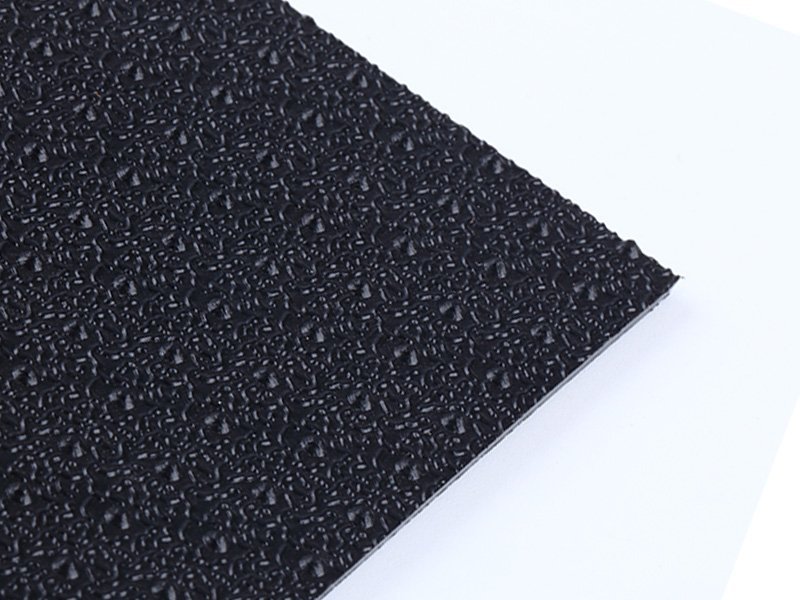
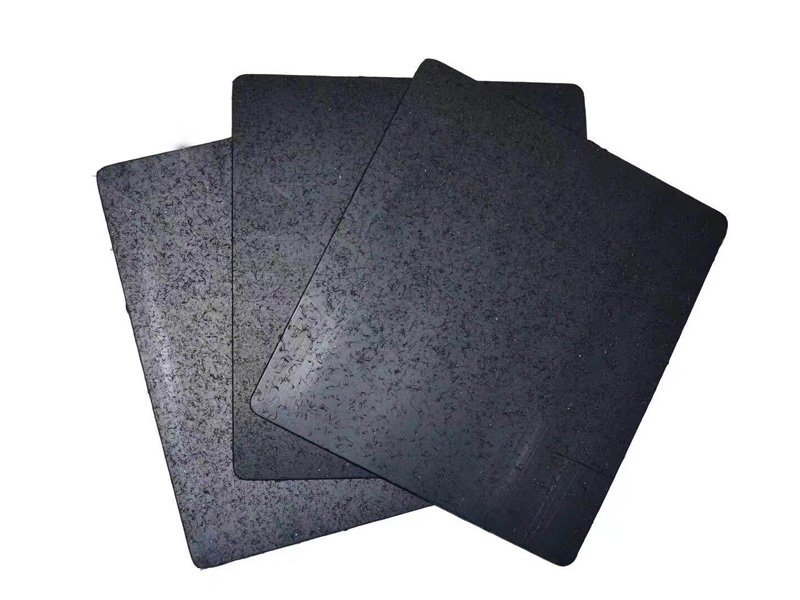
2. Technical Data Of BPM Textured Geomembrane
3. Key Properties of PVC Geomembrane
3.1 Water Resistance and Impermeability
One of the primary functions of a PVC geomembrane is its ability to prevent water migration. The impermeability of PVC makes it an excellent choice for applications that require effective containment of liquids.
3.2 Durability and Longevity
PVC geomembranes are designed to last, with a lifespan of up to 20 years when properly installed and maintained. They are resistant to weathering, UV radiation, and environmental stressors, ensuring long-term performance.
3.3 Chemical Resistance
PVC geomembranes exhibit good resistance to a wide range of chemicals, including acids, alkalis, and salts. This property makes them suitable for various industrial applications where chemical exposure is a concern.
3.4 Flexibility and Workability
The inherent flexibility of PVC geomembranes allows for easy installation over uneven surfaces. This adaptability is essential in applications such as landfill sites and irrigation ponds.
4. Main Advantages of PVC Geomembrane
4.1 Cost-Effectiveness
PVC geomembranes are generally more affordable than other geomembrane options, such as HDPE (High-Density Polyethylene). This cost efficiency makes them a preferred choice for many projects.
4.2 Ease of Installation
The lightweight nature of PVC geomembranes simplifies transportation and installation. Additionally, they can be welded together using heat or solvent methods, ensurin
5. Differences Between PVC and HDPE Geomembranes
5.1 Material Properties
- PVC Geomembrane: More flexible and easier to install, with good resistance to UV and chemicals.
- HDPE Geomembrane: Offers superior tensile strength and puncture resistance but can be less flexible.
5.2 Applications
- PVC: Often used in applications where flexibility and ease of installation are critical.
- HDPE: Preferred for applications requiring high strength and durability.
5.3 Environmental Impact
Both materials have environmental considerations, but PVC geomembranes can be recycled, providing an eco-friendly option at the end of their life cycle.
5.4 Comparison trable of PVC vs. HDPE Geomembranes
6. Is PVC Geomembrane Effective for Containment Systems?
Yes, a PVC geomembrane is highly effective for containment systems, offering reliable performance across applications.
6.1 Performance Metrics
Its 10⁻¹² cm/s permeability blocks 95% fluid migration, retaining leachates in landfills and water in ponds (Geosynthetics Magazine). Reinforced PVC handles 200 N tear forces, ensuring stability under waste loads.
6.2 Key Applications
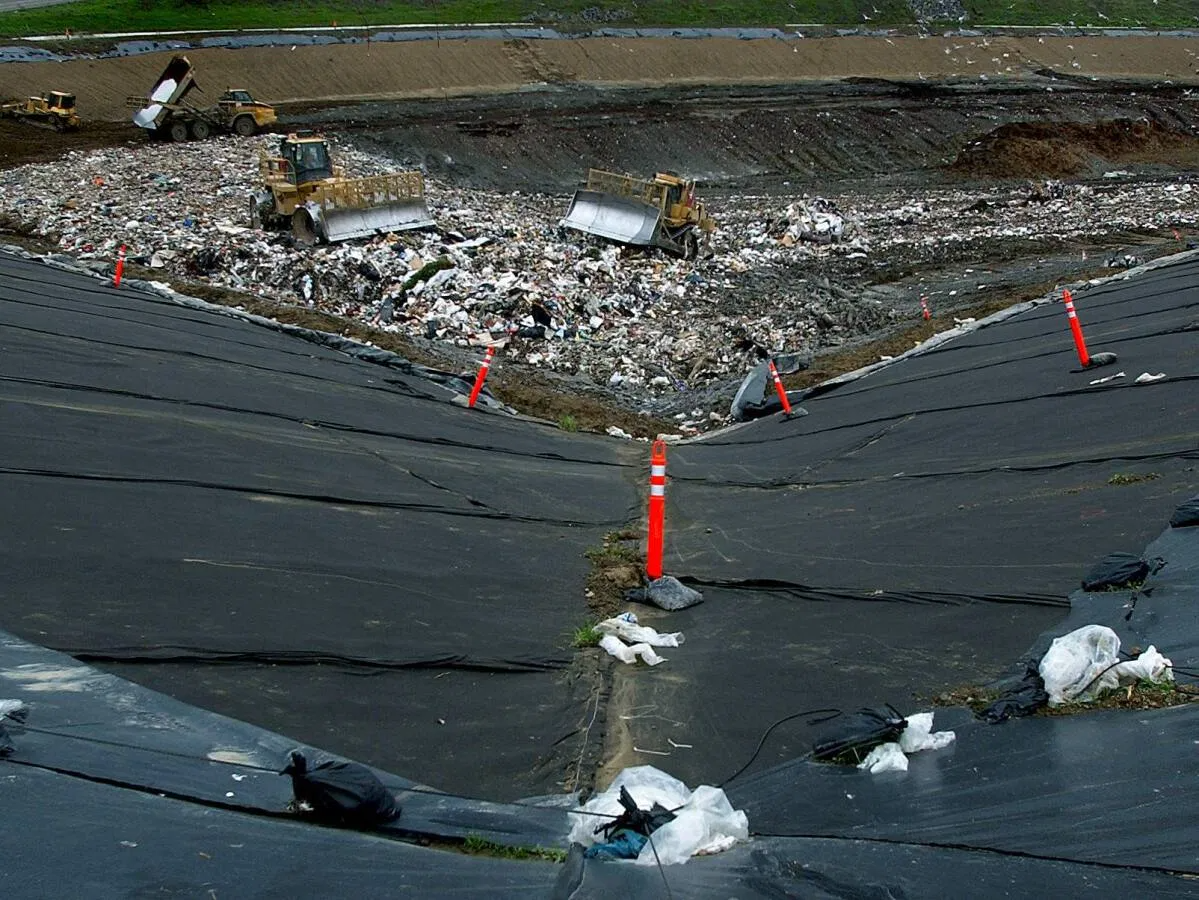
- Landfills: Prevents leachate seepage, protecting groundwater (EPA standards).
- Wastewater: Lines lagoons, resisting mild chemicals (pH 4–10).
- Ponds: Maintains water levels, ideal for aquaculture (NSF-61 certified).
6.3 Installation Best Practices
- Site Prep: Clear sharp objects; use 200 g/m² geotextile underlayment ($0.15/m²) for 90% puncture protection.
- Seaming: Solvent or heat welds (8 kN/m) require skilled labor to avoid leaks (BPM data).
- Inspection: Regular checks cut failure risks by 20% (Layfield Group).
A PVC geomembrane excels when flexibility and cost are priorities, though HDPE may be better for extreme chemical exposure.
7. Applications of PVC Geomembranes
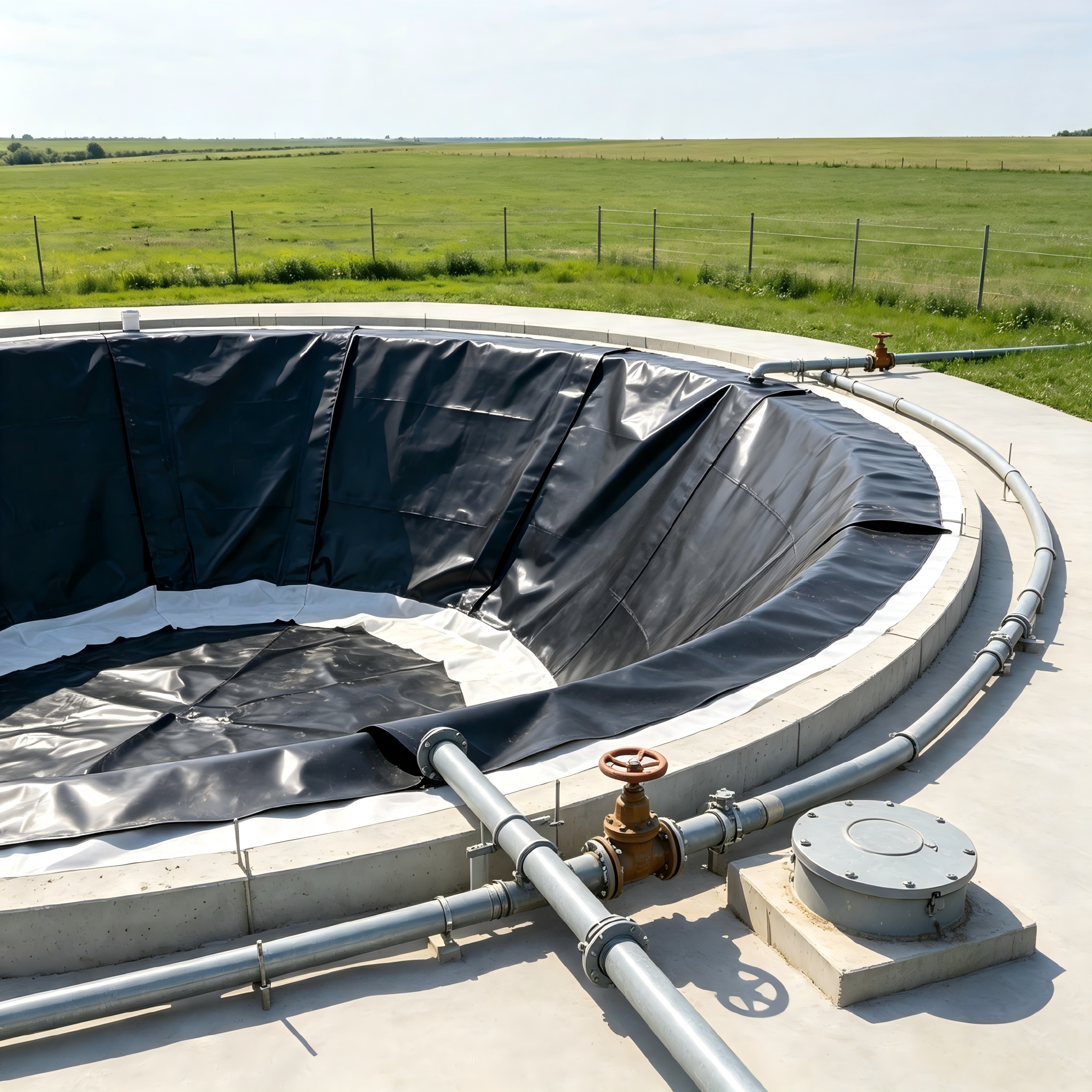
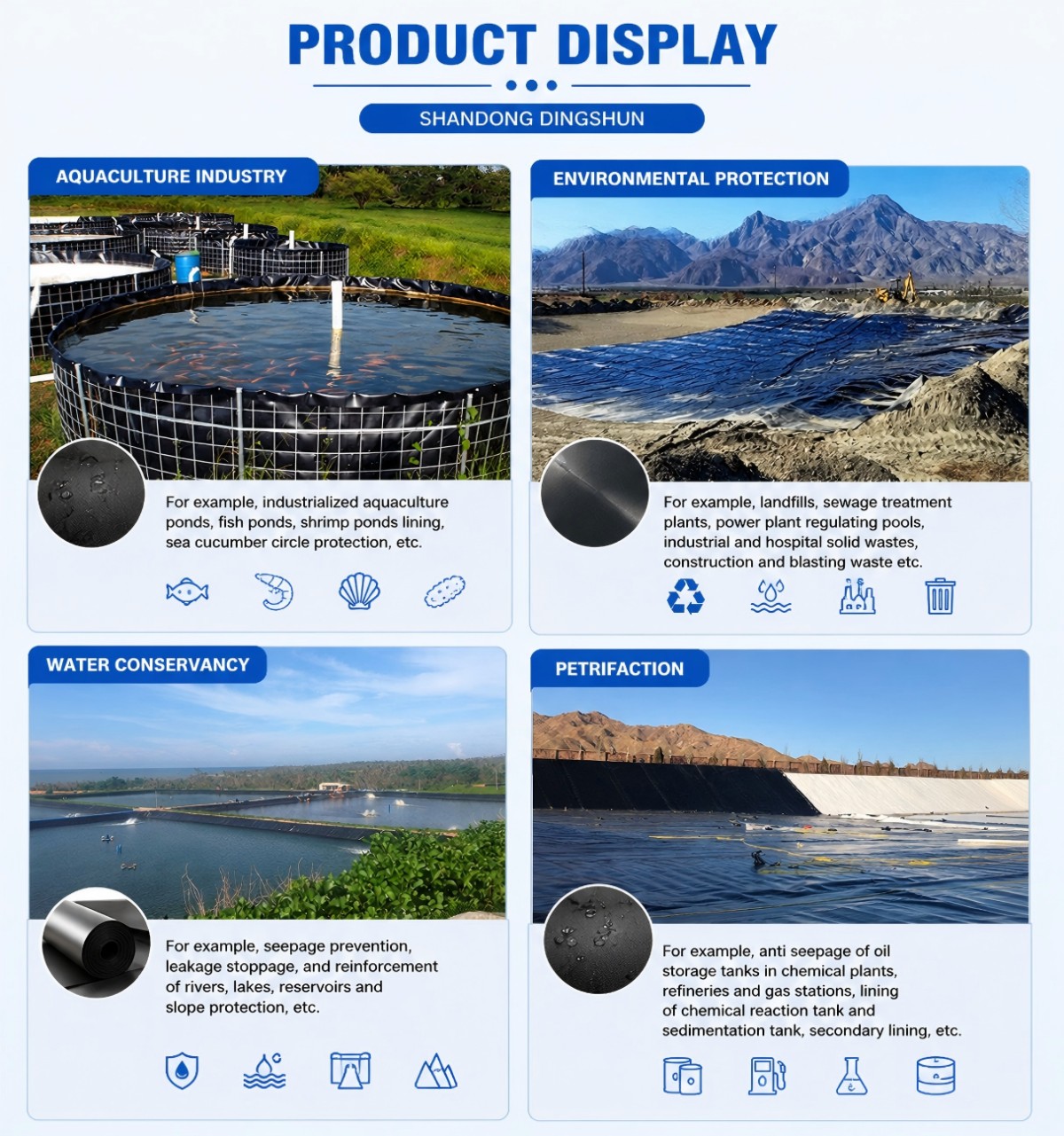
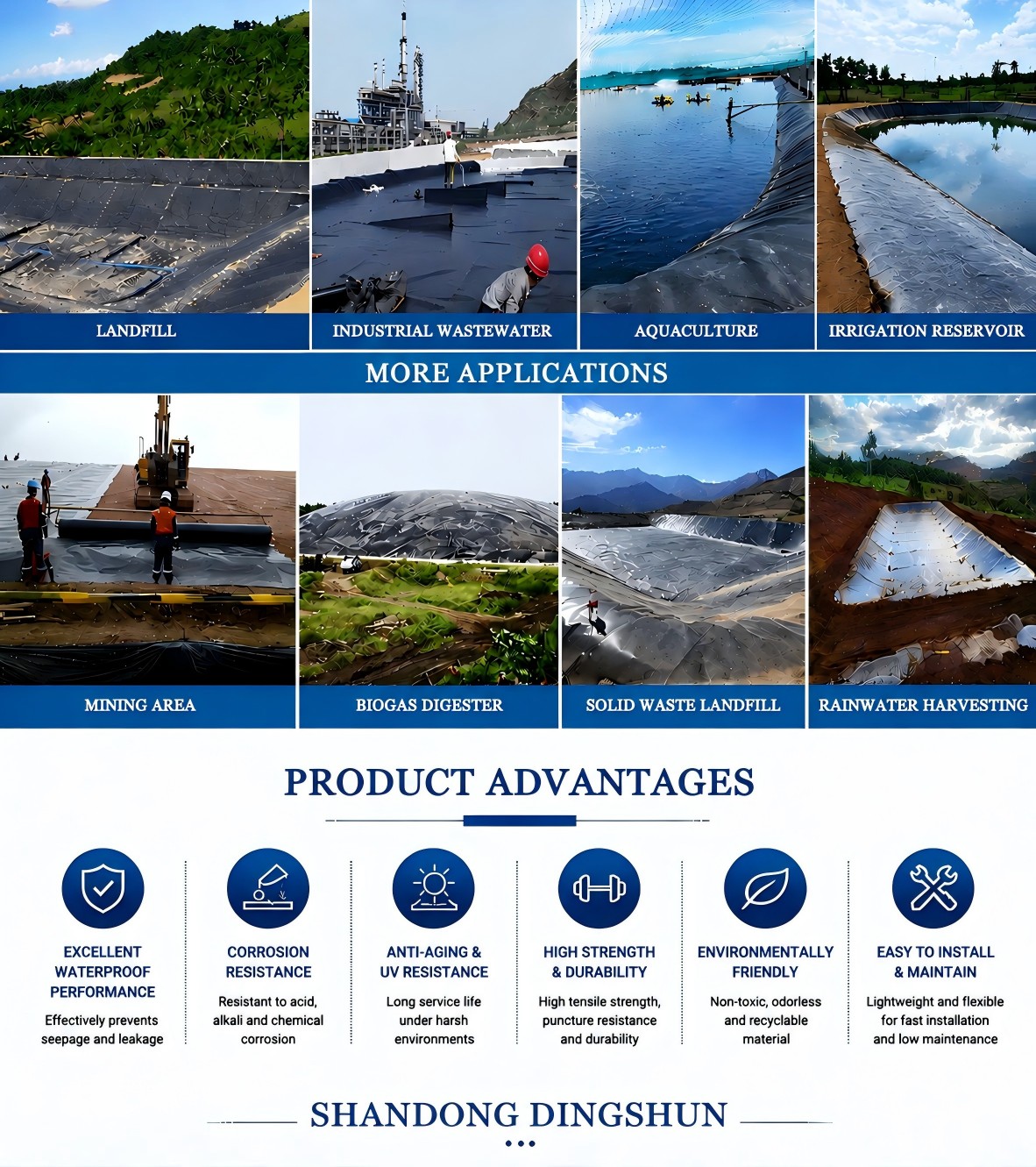
- Waste Management: In landfills, PVC geomembranes serve as liners to contain leachate and prevent groundwater contamination. Their impermeability ensures effective containment of hazardous materials.
- Water Conservation: PVC liners are used in reservoirs, canals, and irrigation ponds to minimize water loss through seepage, aiding in efficient water management.
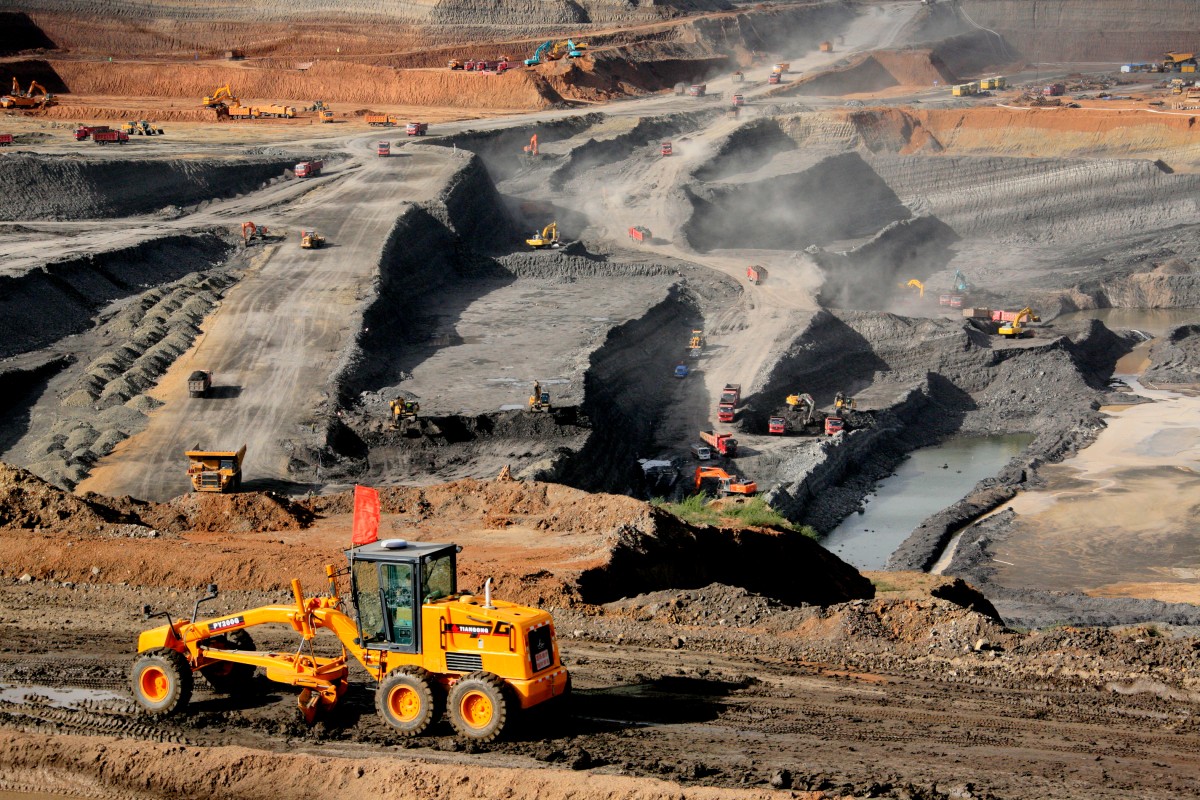
- Mining Operations: In mining, PVC geomembranes line tailings ponds and heap leach pads, providing containment for process solutions and preventing environmental contamination.
- Environmental Protection: PVC geomembranes are employed in applications like soil remediation and wastewater treatment to prevent pollutants from entering the environment.
We can produce products that meet your requirements faster and more accurately with samples.
If the product you need we have stock available, then it is OK. But if no stock available, don't worry, we can take your order with our other clients' order to produce together, but it needs to wait some time.
If you can accept our available sample, we can offer free sample to you. After confirming your order, the sample's freight cost will be refunded.
When the goods are started to produce, we will take photos for the goods and send it to you.
Generally it is 5-10 days. It is according to quantity.
Geomembrane, Geotextiles and other Geosynthetics
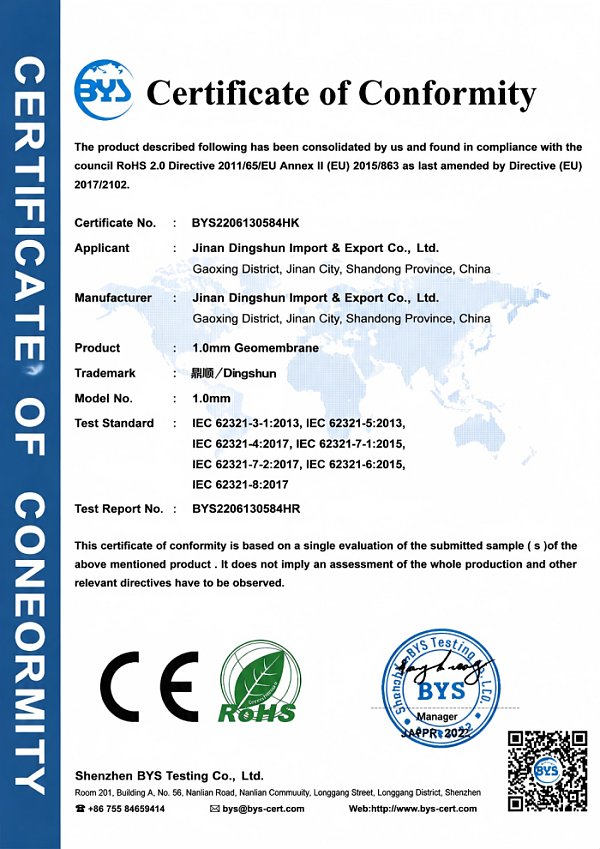
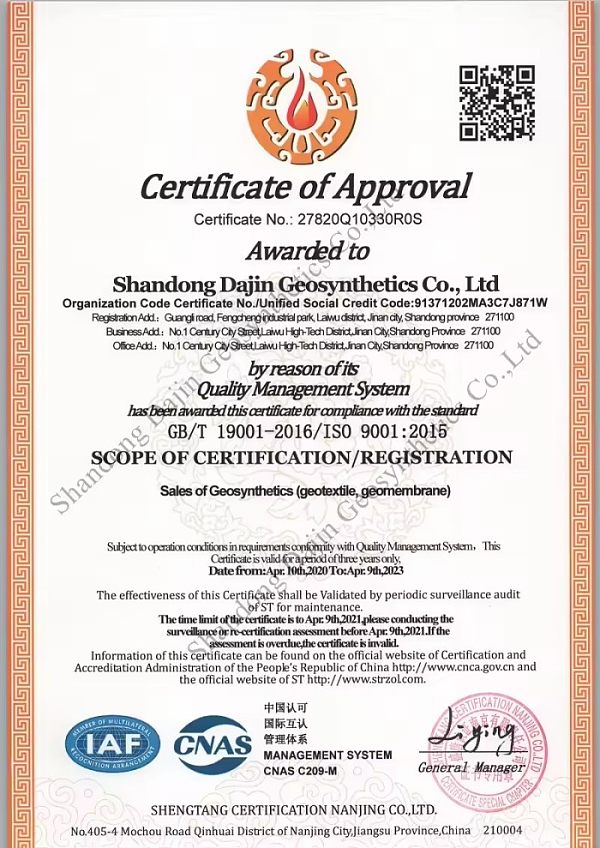
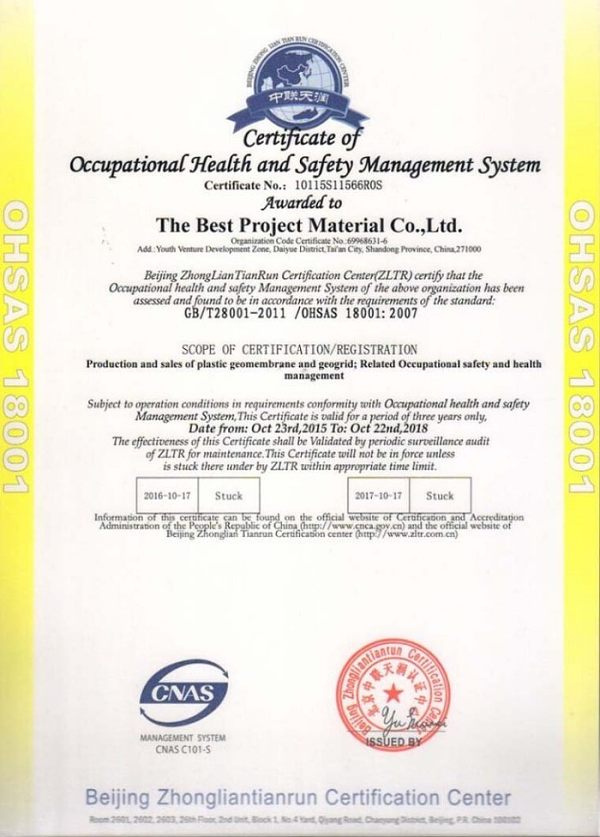
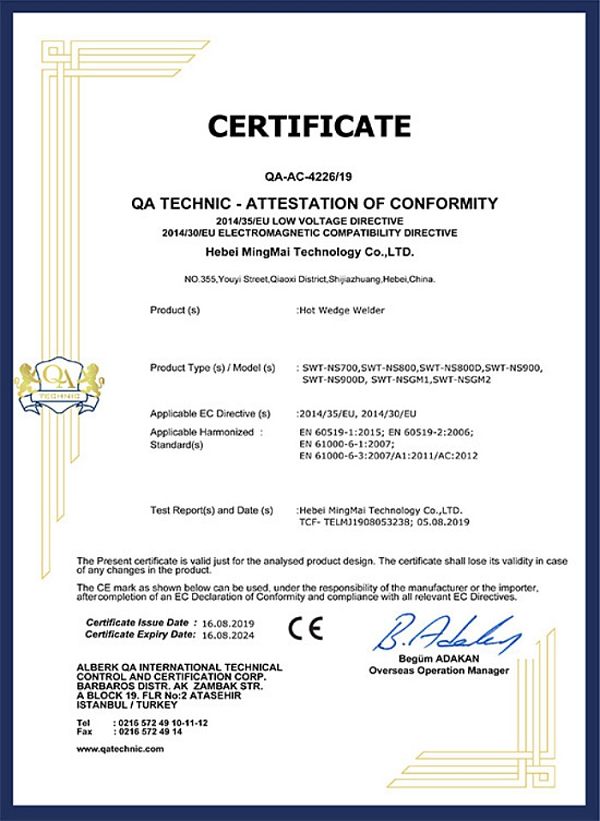
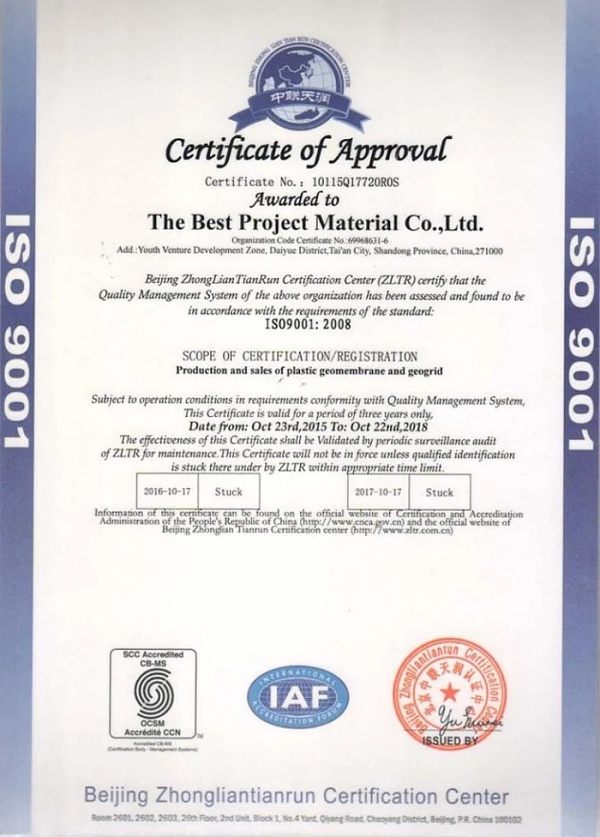
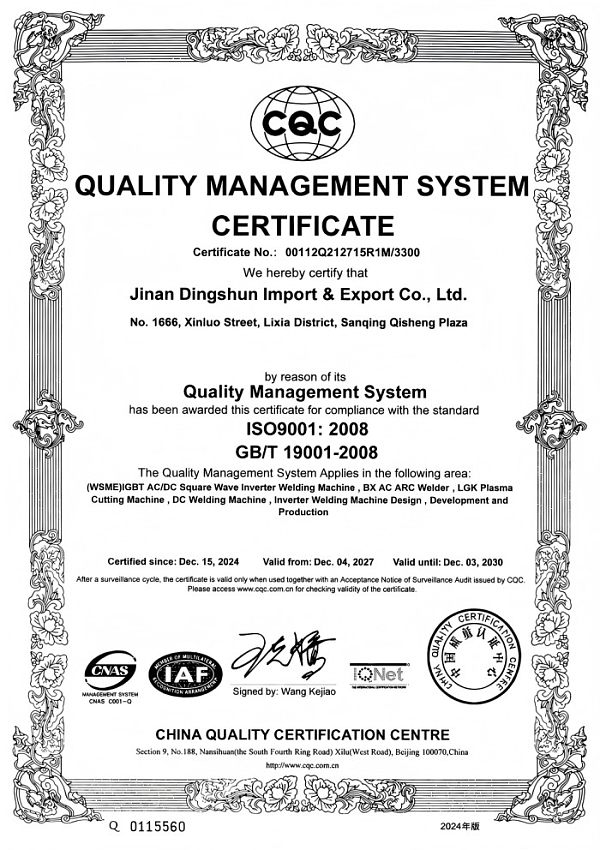
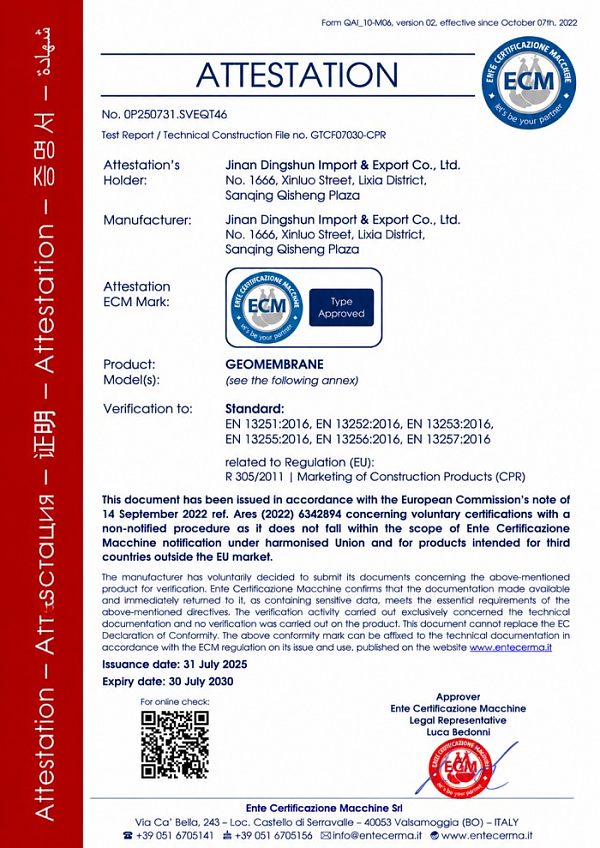
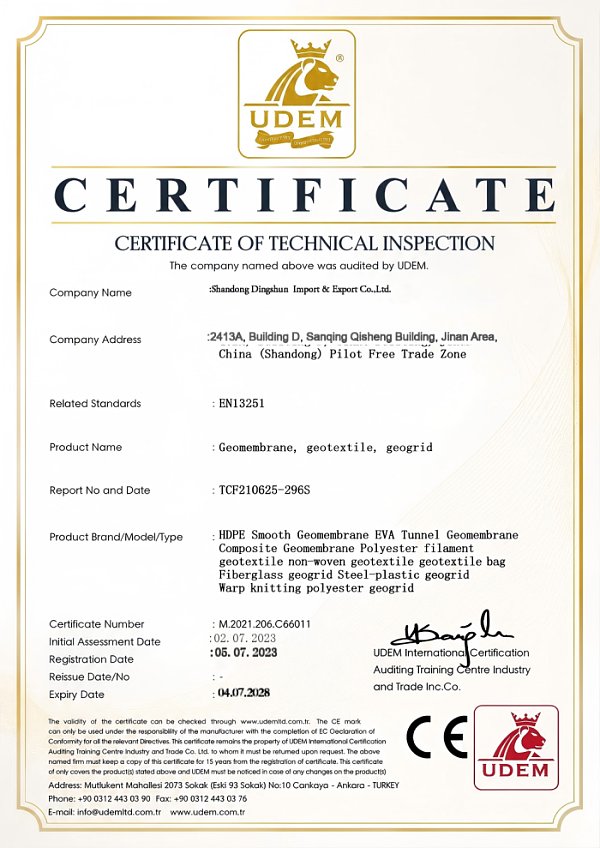
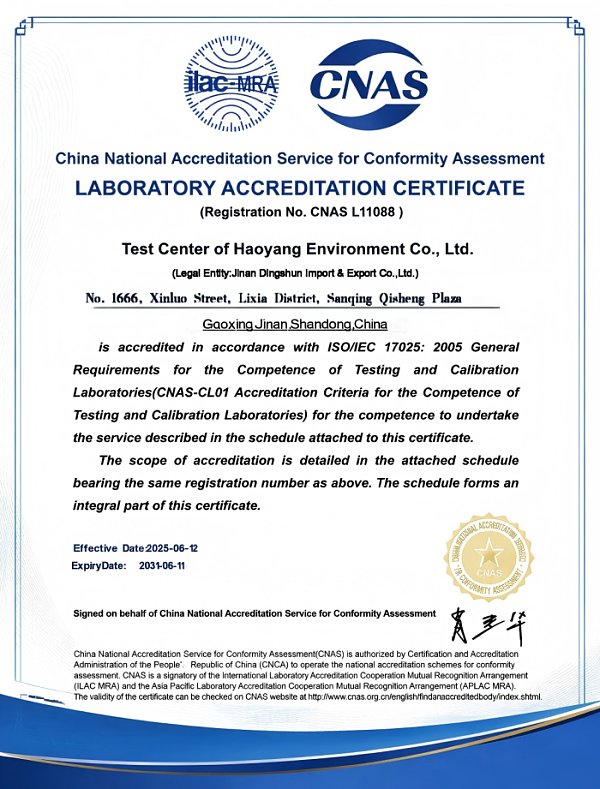
Our products have passed the quality inspection of many authoritative institutions, you can test the sample quality before ordering.
 HDPE Pond Liner For Artificial Lake HDPE Pond Liner For Fish Farm
 HDPE Pond Liner For Artificial Lake
 Chemical Resistant HDPE Geomembrane For Mining
 Anti-Seepage Waterproof HDPE Smooth Geomembrane for Fish Shrimp Pond Farming
 Biogas Digester Plant Storage Bag Tank Collection Covers Waterproofing Lining Mining Water Plant Membrane with Direct
 Landfill Pond Liner Virgin HDPE Geomembrane
 LDPE LLDPE Geomembrane
 Pond Liner
 HDPE Smooth Geomembrane