






Cleaning geomembrane ponds without damaging the liner surface
Cleaning Geomembrane Ponds requires more than removing sludge and algae. The wrong brush, an exposed pump foot, or grit trapped beneath a boot can damage the lining and turn routine maintenance into a leak investigation. For aquaculture ponds and water storage facilities, the practical goal is to remove unwanted buildup without scraping, stretching, or chemically attacking the membrane.
A lined pond does not need to look polished to be ready for service. Cleaning should address the actual problem: accumulated solids, excessive biofilm, contamination, or access for inspection. Chasing every stain with stronger chemicals or harder scrubbing often adds risk without improving operating conditions.
Before draining, check what is holding the liner in place
Review the installation records for membrane material, thickness, seam locations, previous repairs, and drainage arrangements beneath the liner. HDPE, LDPE, and LLDPE are not interchangeable when assessing flexibility and handling. An older exposed sheet also needs more cautious treatment than newly installed material, particularly where folds have remained under tension.
Do not assume complete drainage is always the safest starting point. Where groundwater or trapped gas can build beneath the membrane, removing the pond water may allow the liner to lift. Recent rain, a high water table, or existing bubbles beneath the sheet are reasons to check the drainage design before proceeding. Never puncture a raised area to release pressure.
For aquaculture, move stock and plan sludge collection before lowering the water level. Isolate pumps and aerators against accidental startup. Arrange safe access from the bank; wet algae-covered slopes are slippery, and some tanks or enclosed structures require additional entry precautions. Photograph visible damage before cleaning so it is not confused with damage discovered afterward.
Choose tools by their contact surface, not their label
A “soft” brush can still scratch a liner if its bristles hold sand. A plastic shovel can develop a sharp edge after use on concrete. Inspect and rinse every tool before it enters the pond, including footwear, hose fittings, and suction heads.
- Use soft nylon brushes, clean cloths, and broad, rounded plastic tools for gentle removal.
- Keep metal scrapers, wire brushes, sharp-edged shovels, and abrasive pads away from the membrane.
- Support pumps and fittings on clean, smooth, load-spreading protection approved for the liner; do not rest exposed metal feet directly on it.
- Use a guarded suction inlet that cannot seal against and pull up the sheet. Keep hose couplings from dragging across the floor.
Thickness provides useful context, but it is not permission to use harsher tools. The Pond Liner range includes HDPE, LDPE, and LLDPE options, with listed thicknesses from 0.2 to 3 mm. Confirm the installed grade and its specific data sheet. Laboratory puncture or tear resistance cannot be converted into a safe shovel load or allowable cleaning pressure.
Remove the bulk sludge before touching the surface
Start with pumping or suction removal of loose sediment while enough water remains to keep the sludge workable, where the pond design allows it. Choose equipment suited to the solids present. Trying to move thick deposits with a brush presses grit into the sheet and makes cleaning harder.
Work in small areas rather than pushing a heavy sludge ridge across the pond floor. Keep the suction head under control and observe the liner around it. If the sheet lifts, wrinkles tighten, or the inlet attaches to the membrane, stop and reposition the equipment. Do not pull a trapped hose free by force.
Once loose solids are removed, rinse remaining grit away before light brushing. Keep dried organic deposits wet long enough to soften them. Follow the surface contours rather than trying to flatten wrinkles with foot pressure. On exposed slopes, clean from a stable position without pulling on the liner for support.
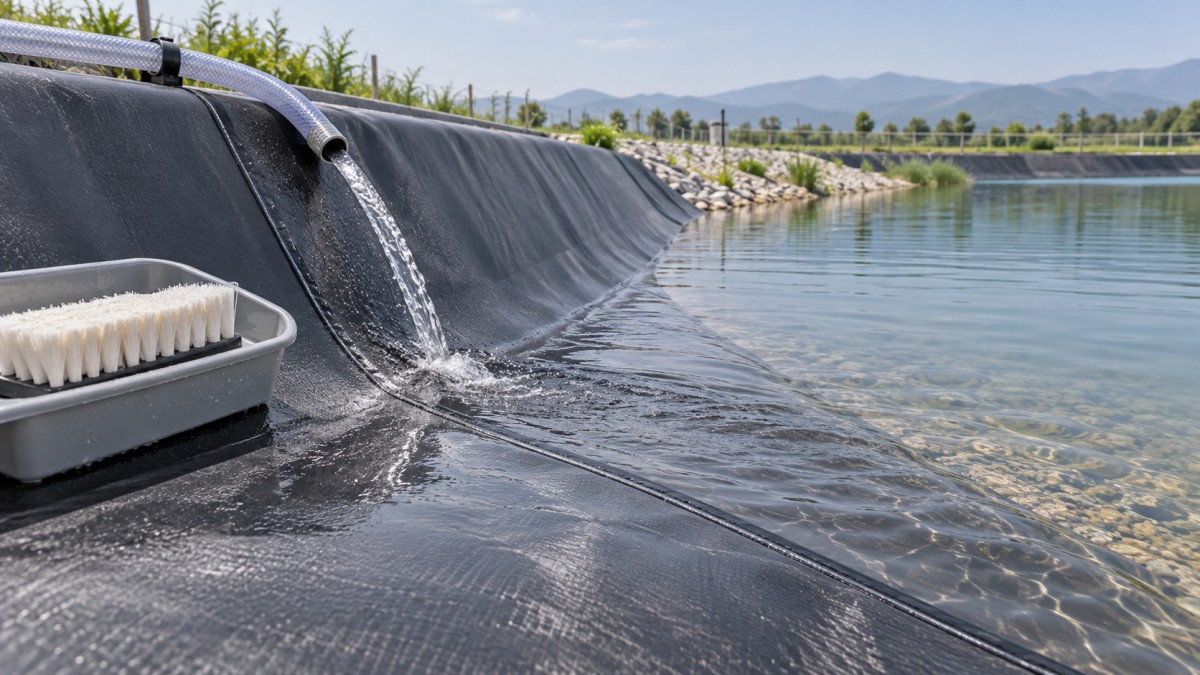
A common trouble spot is the junction between the floor and slope: sludge collects there, folds overlap, and tools can catch a raised edge. Slow down at these transitions. Remove trapped debris gently rather than forcing a brush beneath a fold.
Pressure washing and chemicals need clear limits
There is no universal safe pressure-washer setting for all geomembranes. Damage risk depends on nozzle pattern, distance, temperature, liner condition, underlying support, and whether the jet strikes a seam edge. Start with a low-pressure rinse. Use pressure washing only within limits confirmed by the liner manufacturer or project specification; avoid concentrated jets and do not direct water beneath seams or patches.
Chemical resistance also needs qualification. Polyethylene may tolerate many substances under specified conditions, but compatibility depends on concentration, contact time, temperature, and the complete lining assembly. Pipe seals, fittings, and repair materials may have different limits from the sheet itself.
For routine dirt, try water and mechanical removal first. Where detergent, descaling, or disinfection is necessary, obtain written compatibility guidance and follow the treatment product’s instructions. A small trial area can reveal visible surface changes, but it does not prove long-term compatibility. Never mix cleaning chemicals, and collect contaminated wash water for appropriate treatment or disposal.
In fish ponds, disinfection and cleaning are separate decisions. A visually clean liner does not establish pathogen control, and chemical residues can harm the next stocking cycle. Rinsing and any required water-quality checks should follow the farm’s biosecurity procedure.
Inspect while seams and fittings are exposed
Cleaning creates an opportunity to examine welds, patches, corners, outlet connections, and areas beneath equipment. Look for cuts, persistent abrasion, open seam edges, stress whitening, and distortion around penetrations. Do not lift seam edges with a blade or screwdriver to “test” them.
If a mark remains after rinsing, document its location and photograph it with a scale reference. A stain is not necessarily damage, while a small puncture may be difficult to see. Suspected defects need assessment by a qualified geomembrane installer; visual inspection alone cannot confirm watertightness. Avoid household adhesives or unverified tape repairs.
For internationally supplied materials, keeping product records accessible helps resolve maintenance questions. Jinan Dingshun Import & Export Co., Ltd. combines geosynthetics and aquaculture equipment supply with procurement, quality inspection, logistics, and after-sales service. When seeking cleaning advice, provide the material specification, installation date, photographs, and proposed chemical or equipment details—not simply the pond dimensions.
Before refilling, remove loose tools and debris, confirm that repairs have been inspected, and check outlets and equipment supports. Refill according to the operating plan and watch previously suspect areas. If cleaning repeatedly requires aggressive scraping, review sludge removal frequency and equipment placement rather than making the next cleaning more forceful.