






Start with the water, not the liner catalog
On shrimp and fish farm projects, liner selection usually goes wrong at the first step: the team compares prices and thicknesses before anyone has written down the actual water conditions. That is backwards. A fish pond liner has to live with your water chemistry, your temperature swings, your soil, and your cleaning routine every day. If those conditions are off, leakage risk rises, seam life shortens, and maintenance becomes a recurring cost instead of a planned item.
For project managers, the practical job is to turn site conditions into a clear material decision. Not a generic “best liner,” but a liner that fits the farm you are building or upgrading.
What to check before you choose a fish pond liner
Use this checklist in the same order most successful aquaculture projects do the work.
- Water source: groundwater, river water, reservoir water, or mixed supply. Each one behaves differently over the year.
- Salinity and mineral content: especially important in shrimp farming and brackish-water systems.
- pH range: record normal operating range, not just one test result from a single day.
- Temperature profile: peak summer surface temperature, winter low, and whether ponds are shallow or deep.
- Soil condition under the pond: stones, roots, uneven fill, settlement risk, and drainage condition.
- Cleaning and operation method: net harvesting, sludge removal, aeration layout, vehicle access on embankments.
- Expected service life: temporary grow-out pond and long-term civil pond are not the same purchasing decision.
If even two of these are still unclear, hold the purchase. A cheap early order can become an expensive wrong order.
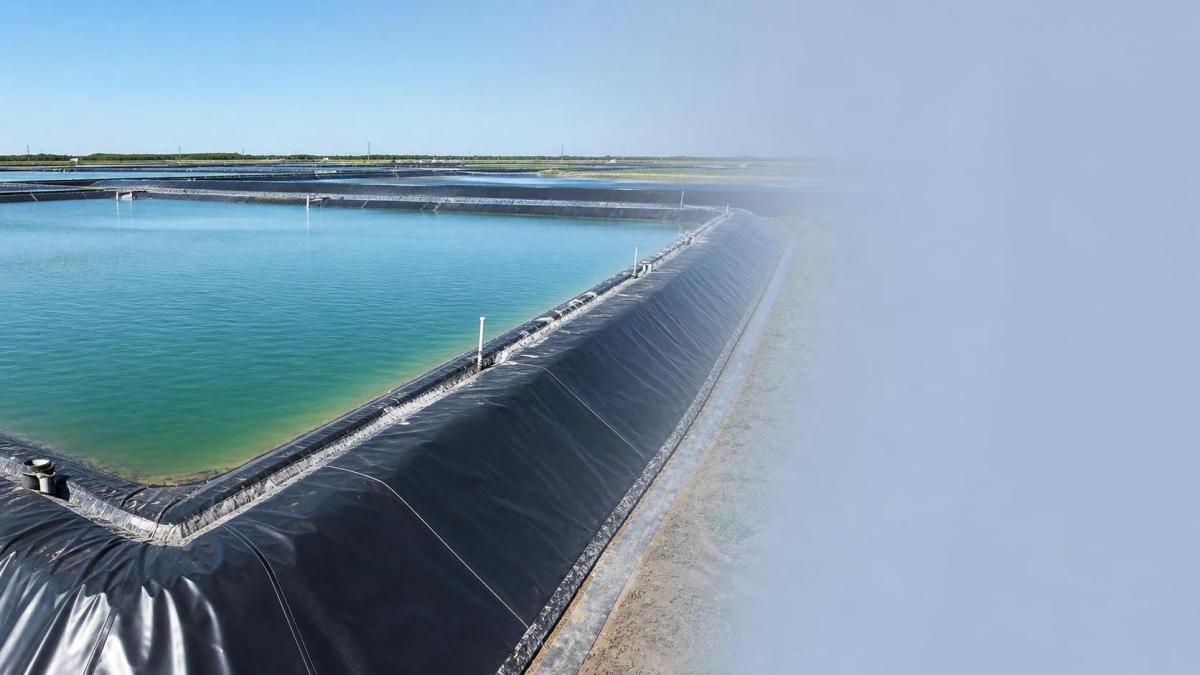
Match material type to the real water environment
In aquaculture, the material choice usually comes down to how much chemical resistance, puncture resistance, flexibility, and installation tolerance the site needs.
HDPE geomembrane is commonly chosen when the project needs strong anti-seepage performance, good resistance to salt and corrosion, and reliable outdoor durability. It is a practical fit for many shrimp ponds, fish ponds, and larger engineered farm layouts, especially where long service life matters and the subgrade can be prepared properly.
PVC geomembrane may be considered where more flexibility is needed, particularly on more complex pond shapes or details. But the right decision depends on the exact exposure conditions, installation method, and maintenance routine, so material comparison should always be tied back to the pond design rather than handled as a simple price comparison.
For projects exposed to strong sunlight, regular wet-dry cycles, and saline water, pay close attention to aging resistance and UV-related retention values in the technical sheet, not just nominal thickness.
Do not choose thickness by habit
A common mistake is specifying the same thickness for every pond in the farm. Thickness should follow risk.
Where product data is available, review the full mechanical profile. For example, thickness ranges such as 0.75-2.5 mm, puncture resistance, tear load, elongation, and stress crack performance are more useful than one headline number. A pond liner that looks similar on paper can behave very differently once it is on a slope and under sun.
Check the water chemistry that actually changes the decision
Not every water parameter has equal weight. In pond liner selection, a few variables drive most of the risk.
- Salinity: In shrimp farms, saline or brackish water pushes you toward materials with solid resistance to salt and corrosion. This is one reason HDPE is widely specified in aquaculture containment.
- Temperature fluctuation: A pond in a hot coastal region sees different stress than one in a mild inland area. High daytime temperatures and cooler nights create expansion and contraction cycles that affect seams and anchorage details.
- pH and treatment routine: If the farm uses regular disinfection, pH adjustment, or water treatment additives, include that in the material review. The liner does not just contact water; it contacts the operating chemistry of the farm.
This is also where technical sheets start to matter. Values tied to density, carbon black content, oxidation induction time, and UV retention help indicate how the liner is built for outdoor use and long-term exposure, which is far more relevant than color alone.
Subgrade preparation decides whether the liner gets a fair chance
Many liner failures blamed on material are really base preparation failures. Before installation, check for sharp stone, construction debris, root penetration risk, and soft pockets that may settle after filling. If the soil is rough, a stronger liner helps, but it does not replace proper groundwork.
On projects where the embankment fill is fresh or inconsistent, look at deformation tolerance as well. A liner with good elongation and tear resistance is useful, but only when the slope geometry and anchoring detail are also correct. Material and civil work have to be reviewed together.
Review the roll size and installation plan before placing the order
This part gets missed in procurement. Width and roll length affect seam quantity, installation speed, labor planning, and waste at the pond edge. If the available width is 2 m to 8 m and roll length is 50 m to 200 m, that should be matched to pond dimensions before ordering, not after the truck arrives.
Fewer seams usually mean fewer potential leak paths, but only if handling on site remains controlled. Very large rolls can reduce seams and still create problems when access roads, lifting equipment, or weather windows are limited.
If you are comparing supply options, HDPE waterproofing material geomembrane artificial pond lining is one example of a pond lining product range where thickness, width, length, and material type can be aligned with different aquaculture layouts rather than forced into one standard specification.
A short list of mistakes that usually cost time later
- Selecting by lowest price per square meter without reviewing water source and soil condition together.
- Using thickness as the only quality filter.
- Ignoring UV and thermal aging indicators for outdoor ponds.
- Ordering roll sizes that create unnecessary seams.
- Assuming a good liner can compensate for poor pond base preparation.
- Reviewing product data but skipping installation logistics, which is where many delays start.
How to make the final call
For most shrimp and fish farm projects, the cleanest decision path is simple. Define the water profile first. Check the pond base and slope condition next. Then compare liner materials based on chemical exposure, UV durability, puncture risk, and installation layout. Only after that should you lock thickness, roll dimensions, and procurement schedule.
A fish pond liner is not just a membrane purchase. It is part of the farm’s operating stability. When the material matches the actual water conditions, you reduce rework, protect water retention, and give the project a much better chance of running as designed from the first filling cycle onward.