






How Fish Pond Liner Quality Influences Water Loss, Cleaning, and Fish Health
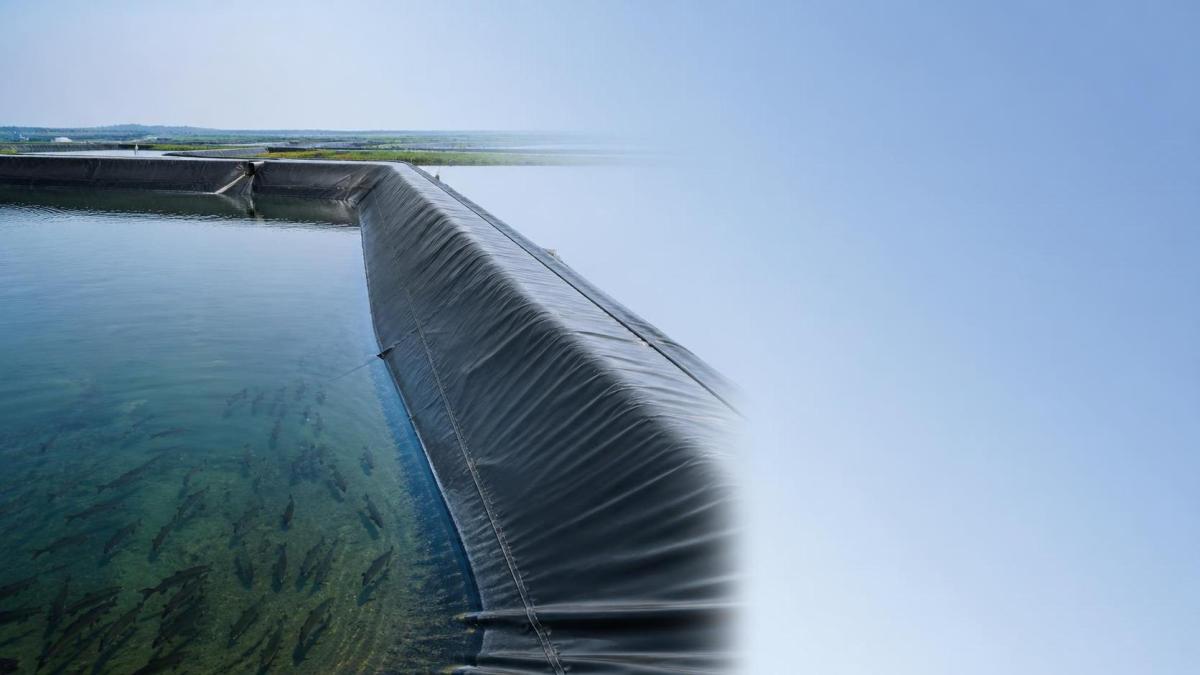
The most common mistake in pond planning is to treat a fish pond liner as a simple waterproof sheet. In practice, liner quality affects three operating issues that project teams deal with repeatedly: unexplained water loss, the amount of labor needed to keep the pond clean, and the biological stability that fish depend on. If the liner is poorly selected, even a well-designed pond can become expensive to run. If the liner is properly specified and installed, routine management becomes more predictable.
For project managers, this matters because liner decisions are rarely isolated material purchases. They sit inside a larger system that includes subgrade preparation, drainage control, stocking density, aeration, sludge handling, and maintenance access. A low-cost liner that punctures easily or wrinkles excessively may look acceptable at delivery, yet create years of avoidable water top-up, sediment accumulation, patching work, and stress events for fish.
Water loss is not only about visible leaks
When operators report falling water levels, evaporation is often blamed first. That can be true in hot or windy conditions, but liner quality becomes the more relevant question when losses are persistent, localized, or difficult to explain. A dependable fish pond liner should provide consistent impermeability and maintain that barrier after exposure to installation stress, sunlight, temperature change, and contact with the pond base.
This is where material choice and thickness start to matter. Geomembranes used in aquaculture are commonly selected from polyethylene families such as HDPE, LDPE, or LLDPE, each with different handling and performance characteristics. HDPE is valued for chemical resistance and low permeability, but it is stiffer and less forgiving on irregular subgrades. LDPE and LLDPE generally offer more flexibility, which can help with contouring and reduce stress at folds or transitions. That does not mean one material is universally better. It means the pond geometry, foundation condition, and installation method must be considered together.
A liner may also lose water performance without a dramatic tear. Pinholes, weak seams, damage from angular stones, stress cracking over time, or poor detailing around penetrations can all create leakage paths. In field conditions, those small defects are often harder to diagnose than major failures. For that reason, procurement should not focus only on nominal thickness. Tensile behavior, elongation, low-temperature bending performance, and dimensional stability under heat treatment all indicate whether the liner can tolerate real installation and service conditions rather than ideal laboratory handling.
In supply practice, products such as 0.25mm-2.5mm HDPE LDPE Geomembrane/Plastic pe geomembrane for Sale are typically evaluated not only by material category but by whether the selected specification matches the pond’s duty. A shallow ornamental pond and a commercial aquaculture basin do not impose the same risks, even if both require impermeability.
Cleaning difficulty usually starts with surface behavior and layout quality
Cleaning efficiency is rarely discussed at the purchasing stage, but it should be. In fish production ponds, the liner surface influences how uneaten feed, biofilm, algae, and sludge settle and how easily they can be removed. A liner that deforms excessively, develops deep wrinkles, or sits unevenly on a poorly prepared base creates sediment traps. Once waste accumulates in folds or depressions, cleaning takes longer and water quality deteriorates faster between maintenance cycles.
This is why installation quality is inseparable from material quality. Even a good geomembrane can become difficult to maintain if the subgrade is rough, the anchoring is weak, or thermal expansion has not been anticipated. Smooth drainage paths, controlled slopes, and carefully treated corners can reduce dead zones where solids collect. For intensive aquaculture, that directly affects labor time and the frequency of partial draining or pressure washing.
There is also a practical tradeoff between toughness and workability. A liner that is highly resistant to penetration but hard to fit around details may lead to rushed field cutting or stressed seam areas. A more flexible liner may conform better and produce a cleaner finished profile. The right answer depends on the project, not on a single headline property.
Fish health depends on a stable pond environment, not just clean-looking water
Fish do not respond to liner quality directly; they respond to the conditions the liner helps create. When leakage alters water depth, when waste is hard to remove, or when the pond bottom becomes a source of contamination because the barrier is compromised, fish are exposed to unstable temperature, poorer oxygen management, and higher organic loading. Those shifts increase stress, and stressed fish are more vulnerable to disease pressure.
A sound fish pond liner supports fish health in several indirect but important ways. It helps maintain design water depth, limits seepage that can introduce unwanted soil interaction, and makes waste removal more controlled. In freshwater and seawater feed fields alike, the liner also serves as a boundary between the cultured environment and the ground below. Where subsoil conditions are uncertain, that separation can be operationally important.
Project teams sometimes assume any “waterproof” plastic sheet is adequate for aquaculture. That is a risky simplification. Agricultural films, general-purpose plastic layers, and engineered geomembranes are not interchangeable just because they all block water at first use. Service life, puncture resistance, seam reliability, and behavior under sunlight and temperature cycling can differ substantially. In aquaculture, early performance is less informative than how the liner behaves after months of cleaning, foot traffic, equipment contact, and water chemistry exposure.
What to judge before approving a liner specification
For technical review, four questions usually reveal whether the liner selection is robust enough for the project:
- Is the material type suited to the pond geometry and subgrade condition?
- Does the thickness reflect actual mechanical risk rather than a generic preference?
- Are the seam method, edge anchoring, and penetration details defined clearly?
- Will the finished surface allow efficient cleaning and inspection over time?
Those questions are more useful than asking only for a data sheet. A specification can look complete on paper and still miss the field conditions that cause most failures. In international supply work, companies such as Jinan Dingshun Import & Export Co., Ltd. typically add value not merely by shipping geosynthetics, but by coordinating procurement, quality inspection, logistics, and after-sales technical support so that the selected liner is practical for the intended engineering use.
Where broader ground engineering or waterproofing experience is needed, geomembranes originally used in waste containment, roadbed isolation, dam works, basements, tunnels, or feed-water fields can offer useful reference points. The important point is not to copy another sector blindly, but to understand the boundary conditions. A liner suitable for general waterproofing may still need different handling standards when fish health and washdown frequency are part of the operating model.
That is why products in the 0.25mm-2.5mm range should be selected with restraint rather than by convenience. Thickness range alone says very little until it is tied to subgrade smoothness, expected traffic, cleaning method, pond size, and the consequences of leakage. For engineering-led procurement, the better decision is usually the one that keeps the pond stable and maintainable, not simply the one that lowers the purchase price of the sheet.
A fish pond liner is doing more than holding water. It is shaping how the pond behaves every day. If project teams judge liner quality through that lens, they tend to make better decisions on material selection, installation control, and long-term operating cost.