






Where does the real budget for a fish pond liner go?
For procurement teams, liner pricing is rarely just a square-meter quote. The visible number usually covers the sheet itself, but total spend is shaped by thickness, resin grade, panel welding, freight, site preparation, installation difficulty, and the cost of failure if the liner underperforms. In aquaculture, that last part matters more than many buyers expect. A low-priced fish pond liner that punctures easily or ages too fast can turn into a drainage problem, stock loss risk, and a replacement project you did not plan for.
A more useful way to compare offers is to split cost into two buckets: upfront purchase cost and lifecycle cost. That is where supplier comparisons become clearer.
Does material type change the budget that much?
Yes, often more than buyers first assume. Different liner materials behave differently in welding, flexibility, puncture resistance, and long-term exposure to sunlight and water conditions. That affects not only unit price, but also installation speed and expected service life.
When reviewing quotations, do not stop at the material name alone. Check whether the supplier has clearly specified thickness, roll size, and whether the quote includes factory prefabrication or field seaming. Two offers can both say “pond liner” and still represent very different project costs.
- Thicker material usually costs more per square meter, but it may reduce puncture risk on rough subgrades.
- More flexible liners can lower installation difficulty in irregular pond shapes.
- Some materials may require more careful handling, which adds labor time on site.
Is thicker always better for aquaculture ponds?
Not automatically. Thickness should match the pond design, base condition, and operating risk. If the pond bottom is well prepared, protected from sharp stones, and the loading conditions are moderate, an unnecessarily heavy liner may push up procurement and freight cost without creating proportional value.
On the other hand, buying too thin is a common false economy. If the liner will be exposed to aggressive maintenance activity, equipment movement, or uneven subgrade, a small saving on material can create a much larger repair bill later. The right question is not “What is the cheapest thickness?” but “What thickness fits this pond’s actual risk profile?”
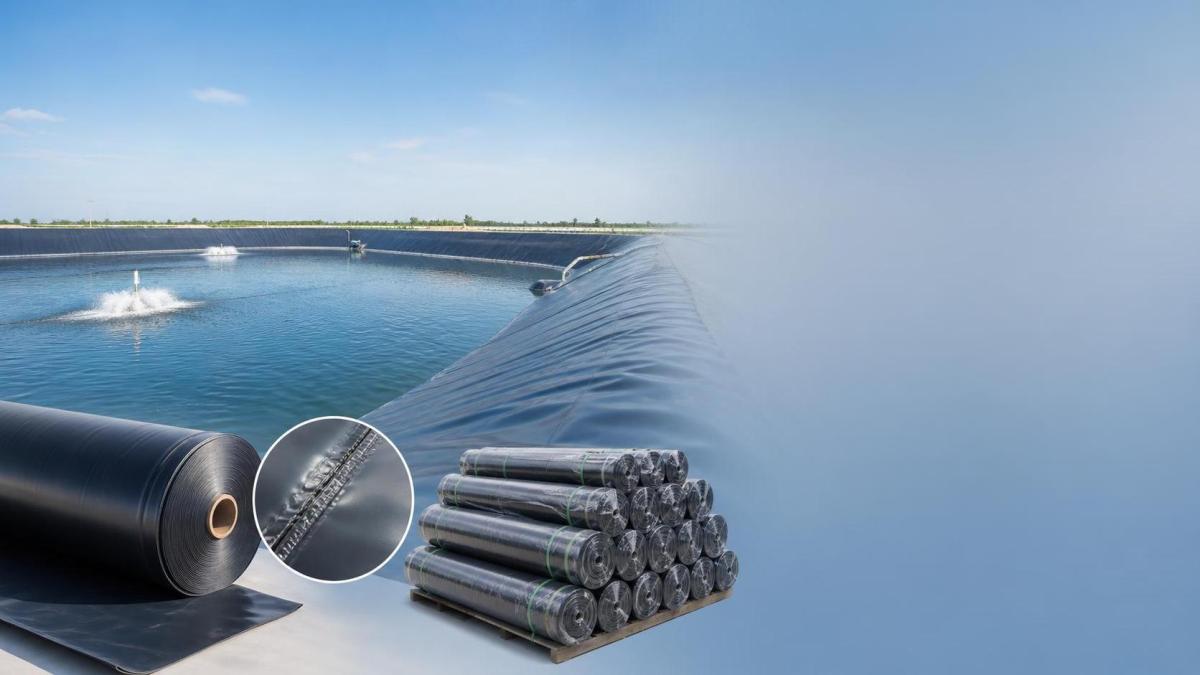
How much does pond size influence the final quote?
Pond size affects more than raw area. Large ponds may benefit from scale in production and shipping, but they also increase seam planning, handling complexity, and installation scheduling. Shape matters too. A simple rectangular pond is usually more material-efficient than an irregular layout with extra corners, slopes, or pipe penetrations.
Ask suppliers what area their quote is based on: flat bottom only, or full installed area including slopes, anchor trenches, overlaps, and wastage allowance. Buyers sometimes compare offers using pond footprint from drawings while suppliers price actual liner consumption. That creates confusion immediately.
What hidden cost items should buyers check before approving a PO?
This is where many budgets drift. A clean quote should show what is included and what is outside scope.
If the quote looks unusually low, that is usually the first place to look.
Can installation conditions outweigh material price?
Absolutely. A moderate-priced liner installed on a difficult site can end up costing more than a higher-priced liner on a clean, accessible site. Steep banks, soft ground, remote location, poor weather windows, and tight construction schedules all increase labor pressure.
For procurement, this means the RFQ should include more than dimensions. Add slope details, access conditions, soil condition, expected installation method, and whether local crews or the supplier’s team will handle seaming. Without that, price comparisons are shallow and usually misleading.
What documents help verify whether two liner offers are really comparable?
Start with the technical datasheet, quotation scope, and packing details. Those three documents usually reveal whether you are comparing equivalent products or just similar descriptions.
- Check thickness, roll dimensions, and stated application.
- Confirm whether the quoted quantity includes overlaps, slopes, and trench allowance.
- Review delivery terms so landed cost is measured on the same basis.
- See whether installation accessories or repair material are included.
- Match lead time to your project sequence, not just the supplier’s production promise.
This is also where an integrated supply partner can reduce friction, especially when procurement, inspection, shipping, and after-sales support need to stay aligned across borders.
Should buyers think about equipment costs when planning liner budget?
Yes, because pond economics do not stop at containment. In many aquaculture projects, the liner decision sits alongside aeration, water management, and operating energy cost. If a project team is budgeting the full pond system, it makes sense to review related equipment at the same time, especially where installation sequence and maintenance access interact.
For example, a lightweight Variable Frequency Surge Aerator may be considered in ponds where oxygen transfer, power saving, and easier installation are part of the wider operating plan. The point is not to merge unrelated budgets, but to avoid making a liner purchase in isolation when equipment layout could affect how the pond is used and maintained.
When does the cheapest fish pond liner become the most expensive option?
Usually when the bid wins on unit price but loses on durability, weldability, or supply reliability. If the material arrives late, if roll sizes create excessive seaming, or if the liner fails early in service, the project pays for it somewhere else. That “somewhere else” could be installation delay, higher labor, more repairs, or operational disruption after stocking.
A practical purchasing test is simple: if one offer is far below the rest, ask what has been removed from the scope or downgraded in the specification. The answer is often more useful than the discount itself.
What is the smartest way to control budget without increasing risk?
Lock down the project inputs before asking for final pricing. That means actual pond geometry, base condition, installation responsibility, delivery term, and required documentation. Once those are fixed, compare suppliers on total delivered scope, not only on liner rate.
If you need one rule to carry into procurement review, use this: buy the liner as part of a working pond system, not as a commodity sheet alone. That is usually the difference between a quote that looks cheap and a project that stays on budget.