






How to diagnose overheating in a permanent magnet aerator
An overheating permanent magnet aerator can disrupt pond oxygenation, damage motor components, and lead to costly service calls. Effective diagnosis starts with distinguishing normal operating warmth from excessive heat using the manufacturer’s temperature limits. A hot casing alone does not identify the fault: excessive mechanical load, restricted cooling, supply problems, and incorrect controller settings can produce similar symptoms.
The useful approach is to establish when the temperature rises, locate the hottest component, and compare electrical and mechanical observations under the same operating conditions. In geomembrane-lined aquaculture ponds, installation clearance and liner protection also belong in that investigation.
Confirm overheating before replacing parts
Check the motor nameplate, controller manual, and equipment documentation for allowable operating conditions and thermal protection settings. There is no universal casing temperature limit for every permanent magnet aerator. Winding temperature, bearing temperature, controller temperature, and exterior surface temperature are different measurements; do not compare one against a limit intended for another.
Record ambient air temperature, water temperature where relevant, operating speed, load current, and time since startup. Measure the same accessible locations consistently. Infrared readings on shiny metal can be misleading because of emissivity and reflections; use an appropriate measurement method rather than judging temperature by touch.
The timing provides direction. Heating immediately after startup suggests a different investigation from heating after prolonged operation in direct sunlight. A hot bearing housing with vibration points toward mechanical trouble, while a hot controller enclosure with comparatively normal motor temperature warrants closer inspection of controller cooling and loading.
Make inspection safe without leaving the pond unprotected
Stop the unit if it exceeds the manufacturer’s limits, repeatedly trips, smells burnt, or develops severe vibration. Arrange backup aeration according to the pond’s oxygen demand and dissolved oxygen readings. Repeatedly resetting thermal protection is not a repair strategy.
Before opening covers or touching moving parts, isolate and lock out all power sources. Follow the controller’s specified discharge time and verify absence of voltage with suitable equipment. A rotating permanent magnet motor can generate voltage even after supply isolation, so prevent unintended rotation where required. Live electrical measurements should be performed only by qualified personnel using appropriate procedures and instruments.
Separate supply faults from controller problems
Start with the incoming supply, not an assumption that the motor has failed. Compare voltage under load with the equipment’s rated range. Long cable runs, unsuitable conductor sizing, deteriorated connectors, and loose terminals can cause voltage drop or localized heating. For three-phase input, check for phase loss and imbalance within the manufacturer’s requirements.
Inspect connections for discoloration, corrosion, moisture, and damaged insulation after isolation. Tighten terminals only to the specified torque. Where a drive is fitted, keep input measurements separate from motor-output measurements: pulse-width-modulated output requires compatible instruments and the drive manufacturer’s measurement procedure.
Read and save controller fault history before clearing alarms. Check that motor parameters, speed limits, current limits, and thermal sensor settings match the installed motor. A replacement controller with unsuitable settings may run the equipment without controlling it correctly. Do not increase current limits or disable temperature protection to suppress trips.
If insulation testing is needed, disconnect sensitive electronics and follow the motor and controller manufacturers’ instructions. Applying an insulation tester through a connected drive can damage it.
Look for resistance where the aerator meets the water
With the equipment safely isolated, inspect the paddlewheel, impeller, shaft, coupling, and gearbox where fitted. Fishing line, vegetation, sediment, and fouling can increase resistance. Check for bent components, rubbing guards, loose mounts, and misalignment. Assess shaft movement only where the manufacturer permits it, accounting for magnetic resistance and the possibility of generated voltage.
Bearing noise, rough movement, abnormal play, and concentrated heating justify further mechanical inspection. Lubricate only serviceable components using the specified lubricant and quantity; adding grease indiscriminately can worsen heating. Also verify water depth and immersion against installation instructions. Excessive paddle immersion or an unsuitable operating speed can increase load without any internal motor defect.
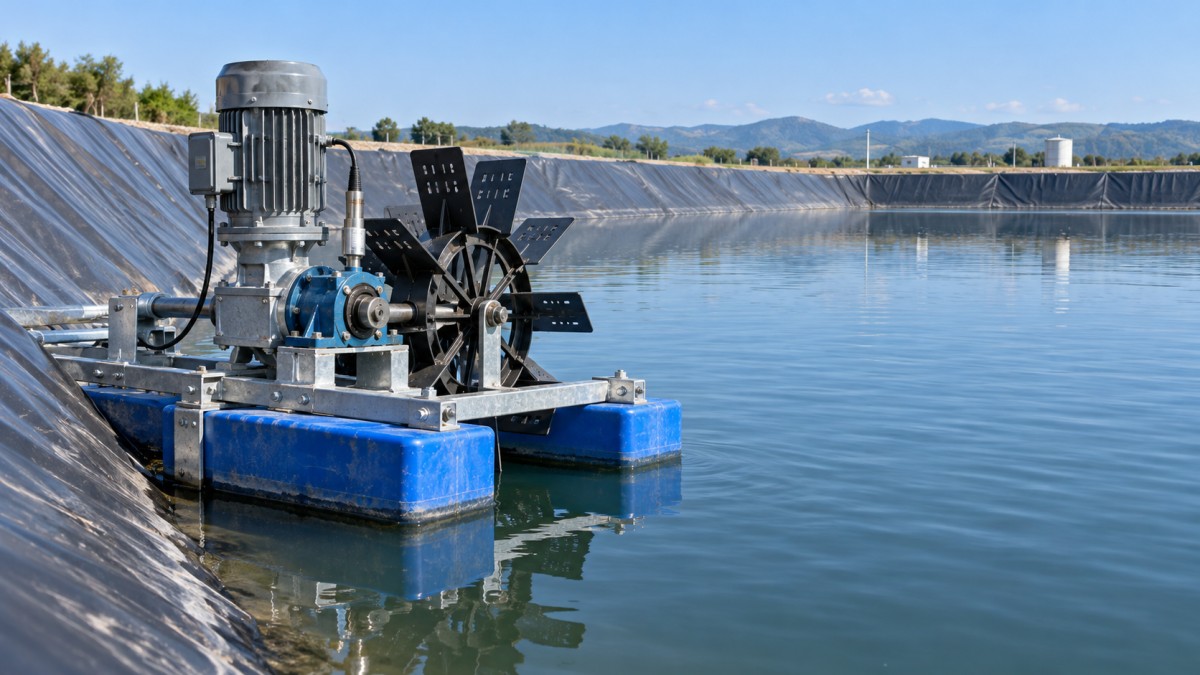
In lined ponds, inspect float position, mooring movement, and clearance from slopes and the pond floor. A displaced unit or low water level can bring moving components closer to the geomembrane. Do not drag machinery over the liner or use it as a working surface; protect it during lifting and servicing.
Lining products such as Geomembrane Film for Water Conservancy Engineering Landscape Lakes Reservoirs and Embankments address seepage control in ponds, reservoirs, and related water projects, not motor cooling. The listed material options include HDPE, LDPE, LLDPE, and PVC, with thicknesses from 0.2–3 mm. Actual liner selection and equipment clearance require project-specific assessment; liner thickness alone does not establish resistance to machinery contact.
Check the cooling path, not just the motor
Cooling arrangements vary. For air-cooled equipment, inspect fans, fins, ventilation openings, and enclosure spacing. Mud, salt deposits, insects, or improvised covers can restrict heat removal. A weather cover that blocks airflow may explain why a previously reliable unit now trips during hot afternoons.
For equipment designed to transfer heat through surrounding water, verify the required immersion and inspect heat-transfer surfaces for fouling. Never assume every aerator motor is submersible or water-cooled. Check controller cabinet ventilation separately, especially if its fan has failed or its filters are blocked. Do not leave electrical enclosures open as a cooling workaround.
Use a controlled restart to decide the next step
After correcting an identified issue, restore guards, seals, and connections before restarting. Monitor temperature trend, current, speed, vibration, and aeration performance under comparable conditions. A lower temperature immediately after cooling proves little; the unit must remain within its specified limits through the relevant operating period.
Escalate persistent overheating, unexplained current imbalance, insulation damage, water ingress, or suspected winding and rotor faults. Excessive temperature can damage insulation and, depending on magnet grade and exposure, affect permanent magnet performance. Internal repairs need the correct technical information, not trial-and-error replacement.
For supplier support, prepare the motor and controller model numbers, nameplate photographs, fault history, measured temperatures and currents, operating depth, and installation photographs. Jinan Dingshun Import & Export Co., Ltd. combines geosynthetics, aquaculture equipment, and engineering equipment supply with procurement, quality inspection, customs declaration, logistics, and after-sales service. A documented fault record helps coordinate compatible replacement parts and distinguish equipment issues from installation conditions.
Return the aerator to regular service only when the temperature trend is acceptable, protection remains active, and the underlying cause has been addressed. If the cause remains uncertain, preserve the measurements and escalate rather than treating another successful reset as evidence of reliability.